

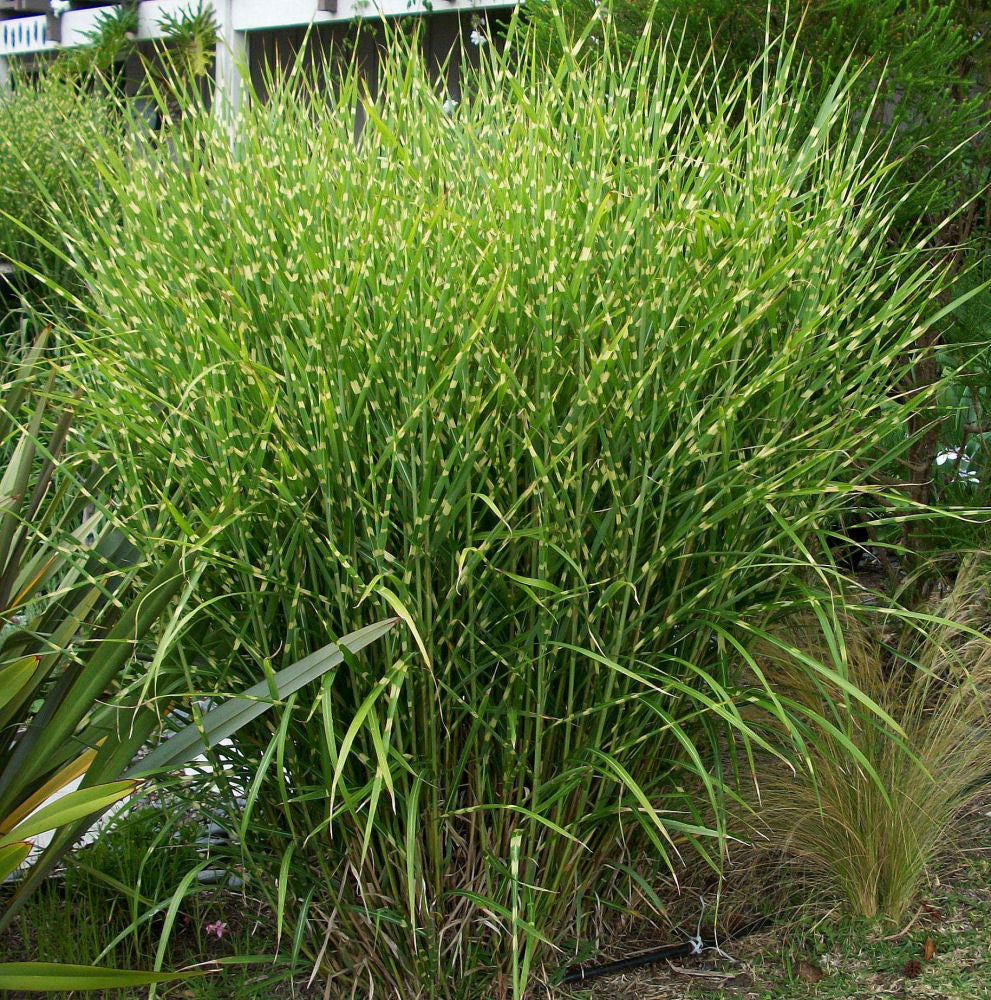
Porcupine Grass (Miscanthus sinensis 'Strictus') - 1 gallon -Ship Only
Porcupine Grass (Miscanthus sinensis 'Strictus') - 1 gallon -Ship Only
Plant Details
- Size
- 1 Gallon
- Attributes
- Erosion Control, Naturalizing, Tolerates Clay, Urban Tolerant
- Exposure
- Sun
- Features
- Deer resistant, Summer flowering, Yellow Fall Color
- Habit
- Arching
- Height
- 5-6'
- Soil
- Average
- Width
- 3-4'
- Zone
- 4–9
Description
Porcupine Grass, or Miscanthus sinensis 'Strictus', is a visually captivating ornamental grass that brings a unique flair to home gardens. Known for its striking horizontal yellow stripes on arching green leaves, this grass adds a dynamic element to any outdoor space. Originating from East Asian grasslands, Porcupine Grass is celebrated for its ability to adapt to various climates, making it a versatile addition to your garden. Reaching heights of 5 to 7 feet with a spread of 3 to 5 feet, this grass forms a dense clump that creates privacy screens or serves as a dramatic focal point. Its care is straightforward: plant in full sun, provide well-drained soil, and water moderately. Hardy in USDA zones 5 through 9, it withstands cold winters and hot summers, ensuring year-round beauty with minimal effort. Beyond its aesthetic appeal, Porcupine Grass supports local wildlife and helps stabilize soil, contributing to a healthier garden ecosystem. Its low maintenance nature and striking appearance make it an excellent choice for those seeking to enhance their outdoor living space without the hassle of intensive gardening. Historically, Miscanthus sinensis has been a staple in East Asian gardens, symbolizing resilience and beauty, and now you can bring that rich heritage into your own backyard. Whether you're looking to create a serene retreat or a vibrant garden display, Porcupine Grass is an ideal choice for any gardener seeking both style and substance.Will this grow in my area?
This plant is hardy in Zones 4–9–4–9. Enter your ZIP to check your zone.
Out of stock
Couldn't load pickup availability

1. Dig a hole 1½–2× the width of your plant's root ball. Set the soil to the side.
2. Mix your backfill — Pine Bark Soil Conditioner, Compost & Native Soil (1/3 of each) in a wheelbarrow or on the ground.
3. Plant it high — when backfilling, keep the plant 2–3" higher than the surrounding soil (as shown). Plant flush with the soil if in a raised bed.
4. Mulch the top of the soil 2–3" deep around the plant — keep mulch away from the main trunk.
5. Feed as you plant with Holly-tone for acid-loving plants.
The 1/3 backfill blend:
Over- and under-watering is the #1 cause of plant death — so always check the soil before you water.
- Clear or dusty → water the plant
- Muddy → soil is too wet
- Moist with a little soil clinging to it → watered just right ✓
- Won't go in → water immediately
Newly planted trees & shrubs — keep the soil moist their first season and never let it dry out. Water slowly at the base (hose ~6" from the trunk, pencil-thin stream):
- Shrubs — 3 min
- Ornamentals (flowering crab, etc.) — 10 min
- Evergreens (6') — 15 min
- Deciduous (2½" caliper) — 15 min (+15 min per extra inch)
Using a Gator Bag? Fill it every 3 days.
How often (OHIO Weather) (new plantings):
- Apr 15 – May 15: once a week
- May 16 – Sept 15: twice a week
- Sept 16 – Oct 31: once a week
- Mid-Nov – early Dec: once, if the ground isn't frozen
- Choosing a selection results in a full page refresh.
- Opens in a new window.